
FDC Summit 2026: Building the Region’s Digital Backbone

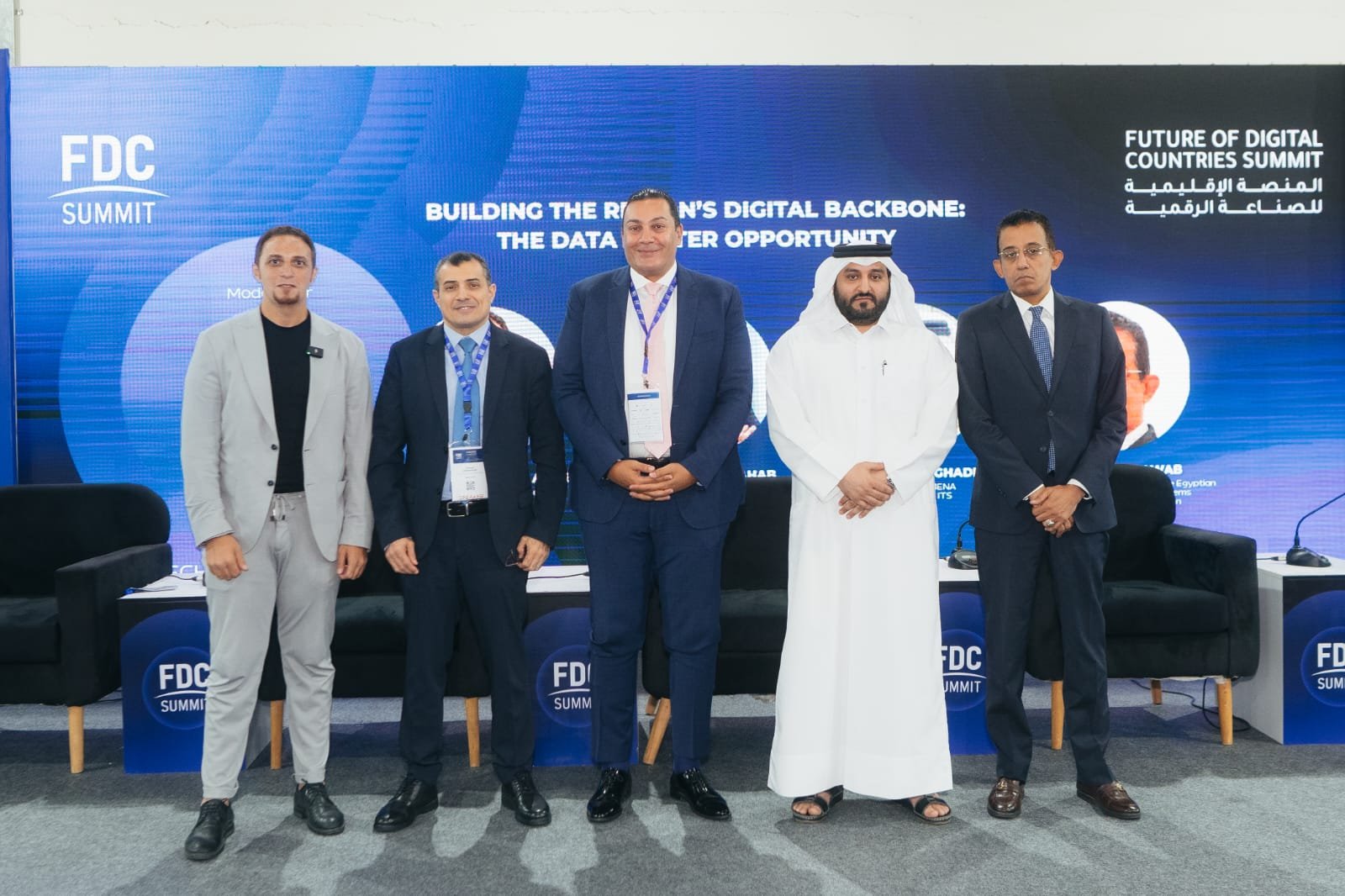
Building the Region's Digital Backbone: Avala joins the Data Center Opportunity panel.
At the Future of Digital Countries (FDC) Summit in Cairo, Avala Complex ITS took part in a panel discussion on the data center boom reshaping the Middle East — from AI-driven demand to the region's path toward a mature, sovereign digital infrastructure by 2030.
The Middle East is rapidly emerging as a global digital infrastructure hub — not by accident, but by design. Industry forecasts put the region's data center capacity tripling by 2030, from roughly 1 GW to 3.3 GW, driven by cloud migration, AI workloads, and state-led investment on a historic scale: Saudi Arabia's $100 billion "Project Transcendence," hyperscaler commitments from AWS, Microsoft and Google, and new national cloud regions coming online year after year.
That was the backdrop for the panel discussion "Building the Region's Digital Backbone: The Data Center Opportunity," held as part of the FDC Summit in Cairo. Moderated by Dr. Ahmed Abdel Latif, the session brought together regional operators and technology leaders — including Avala Complex ITS — to discuss what's driving the boom, what it takes to scale responsibly, and where the region's infrastructure is headed through 2030.
"We're not building warehouses of old metal — we're laying the new power grid of our digital economy."
Four themes from the discussion
Cloud, AI, and data sovereignty
Rapid cloud adoption, AI workloads requiring 5–10× the compute of traditional applications, and new data-residency laws are converging to drive unprecedented local demand for capacity.
Power, cooling, and connectivity as one system
Panelists stressed that scaling a data center is like city planning: power supply, liquid cooling, fiber redundancy, and regulatory compliance all have to move together, not in isolation.
Geography, energy, and capital converge
Strategic location at the crossroads of major submarine cable routes, low-cost power (around $0.05–0.06/kWh), and deep sovereign-wealth backing give the region a rare combination of advantages.
From scattered projects to a mature backbone
New hyperscale regions, renewable-powered campuses, and liquid-cooled AI facilities are expected to mature into a fully interconnected regional network by 2030 — with the Gulf exporting digital services, not just consuming them.
The constraint to watch
Asked what single factor most limits regional data center growth today, the panel's answer was consistent: grid power availability. Fiber connectivity across the Gulf is already strong, but securing reliable, sufficient — and increasingly green — power remains the harder, slower-moving constraint behind most new projects.
"Don't wait for demand to hit — governments and industry must build the foundations today so that tomorrow's digital economy has solid ground to stand on."
Source: FDC Summit 2026 panel discussion, "Building the Region's Digital Backbone: The Data Center Opportunity," Cairo, Egypt.
